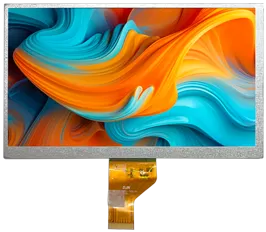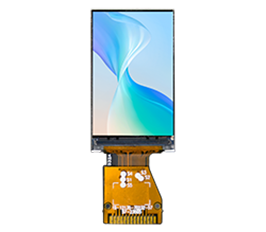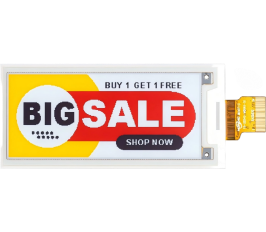
IPS is usually the stronger candidate when an industrial HMI must remain readable from several directions, while TN can still suit equipment with a controlled viewing position and appropriate specifications. Both can be TFT LCD technologies. The decision should consider the installed viewing angle, interface content, operating conditions and complete module cost.
For equipment manufacturers, a screen that looks clear on a workbench may behave differently behind a cover lens or above an operator’s eye level. Comparing IPS and TN therefore starts with how people will use the finished equipment.
An IPS TFT LCD combines an active-matrix transistor backplane with an in-plane switching liquid crystal mode. The backplane addresses the pixels, while the liquid crystal arrangement influences how the display controls light.
In its explanation of IPS technology, Merck describes liquid crystal molecules rotating within a plane parallel to the glass. This arrangement reduces viewing-angle dependence compared with conventional TN configurations. For an HMI, the practical benefit is more consistent image interpretation when the viewer moves away from the center.
“TFT” and “IPS” answer different questions. TFT describes pixel addressing; IPS describes a liquid crystal operating mode. An IPS display can therefore also be a TFT display.
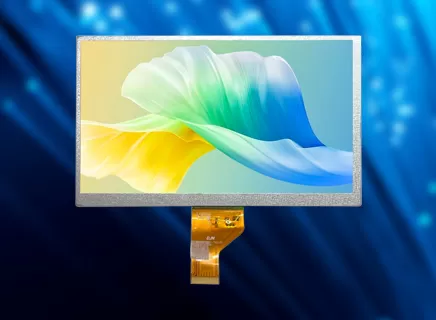
When reviewing a tft display module, identify its liquid crystal mode separately from the addressing technology.
An IPS label alone does not specify brightness, outdoor readability, operating temperature or interface compatibility. Those remain module-level requirements. Likewise, stable colors across viewing positions do not automatically mean that a display has been calibrated for accurate color reproduction. Buyers should distinguish viewing consistency from measured color accuracy.
A TN TFT LCD uses a twisted nematic liquid crystal mode with a TFT backplane. Merck’s explanation of TN technology describes how an applied electric field changes the orientation of the liquid crystals, changing the way the optical stack transmits light.
For an equipment project, a key question is whether the selected TN panel remains legible throughout the required viewing region. Depending on the panel and observation direction, contrast, gray levels or colors can change as the viewer moves away from the preferred position.
That characteristic does not make every TN panel unsuitable for industrial use. A panel mounted directly in front of an operator may satisfy the application’s requirements. A similar panel installed above eye level may need a different assessment.
TN should therefore be evaluated against a defined installation. Neither its suitability nor its purchase cost can be established from the technology name alone.
A useful comparison separates liquid crystal behavior from features determined by the complete display module. Size, backlight, touch construction and interface can differ even when two products use the same liquid crystal mode.
| Evaluation factor | IPS TFT LCD | TN TFT LCD | What buyers should verify |
|---|---|---|---|
| Viewing position | Generally less dependent on observation direction | May require closer attention to preferred viewing direction | Readability from all required operator positions |
| Off-axis gray levels and color | Generally more consistent as the viewing position changes | Changes may be more noticeable in unfavorable directions | Actual alarm colors, gradients and small text |
| Response time | Depends on the specific panel and test conditions | Depends on the specific panel and test conditions | Relevant transitions at the required temperatures |
| Power consumption | Depends on the complete module and brightness setting | Depends on the complete module and brightness setting | Module power under comparable operating conditions |
| Outdoor readability | Requires suitable brightness and optical design | Requires suitable brightness and optical design | Installed contrast and reflections |
| Purchase cost | Depends on specification, quantity and supply conditions | Depends on specification, quantity and supply conditions | A quotation for an equivalent module configuration |
| Touch and interface integration | Must be specified separately | Must be specified separately | Touch controller, connector and host compatibility |
A viewing-angle specification also needs a measurement context. A limit based on a contrast threshold does not necessarily describe when a particular warning symbol becomes difficult to interpret.
The SID/ICDM display measurement resources provide standardized measurement references and test patterns. These can support a structured evaluation, while the equipment team still needs to define its own acceptance criteria for the actual interface.
Cost comparisons should use matching assumptions. Comparing a bare TN module with a touch-integrated IPS assembly gives little guidance about the real design choice. Align the resolution, backlight, touch requirements, cover lens and connection arrangement before requesting quotations for a custom lcd display.
IPS is particularly worth evaluating when the installation creates several viewing positions. Examples include a machine interface used by operators of different heights, a shared equipment status display or a terminal read from both standing and seated positions.
The decision becomes more important when the interface relies on color or gray-level differences. A process trend, a shaded button or a warning icon should remain distinguishable wherever the operator is expected to stand.
Use an installation checklist before selecting a panel:
| Installation factor | Record before ordering samples | Check during evaluation |
|---|---|---|
| Mounting position | Screen height, tilt and enclosure recess | Whether the enclosure restricts the viewing region |
| Operator positions | Expected standing or seated locations | Legibility from each required position |
| Screen orientation | Landscape or portrait installation | Whether image behavior changes in the intended orientation |
| Interface content | Smallest text, alarm colors and status symbols | Clear interpretation using the production interface |
| Optical assembly | Cover lens, touch panel and surrounding lighting | Reflections and contrast in the assembled configuration |
The checklist converts “wide viewing angle” into a practical requirement. For instance, an angled status display needs to be evaluated from the positions where staff actually read it, rather than only straight ahead.
DJN’s ips lcd module range provides a starting point for reviewing candidate modules. Narrow the shortlist using the individual model’s interface, dimensions and operating specifications, then test samples in the intended assembly.
TN can remain a practical candidate when the operator views the screen from a predictable position and the interface remains clear throughout that viewing region. A fixed instrument, a straightforward numeric display or a control panel with limited viewing variation may justify evaluating a suitable TN module.
The strongest purchasing argument is a verified fit between the panel and the application. A lower quoted price matters only when the module also meets readability, integration and environmental requirements.
For a fair evaluation, show the same interface on candidate panels at comparable luminance. Check small text, inactive controls, warning symbols and gray backgrounds. Include any viewing positions created by routine operation or maintenance.
Also compare the complete implementation cost. An attractive panel price may be offset by a different connector, mechanical changes or additional validation. Conversely, an existing TN design that already satisfies the equipment requirements may offer no practical reason for a technology change.
Avoid assuming that every TN panel is faster, cheaper or more efficient than every IPS panel. Those conclusions require comparable product data.
An IPS TFT LCD uses IPS as its liquid crystal mode and TFT technology to address its pixels. IPS and TFT therefore describe different aspects of the same display. A comparison between IPS and TN is more meaningful than treating IPS and TFT as mutually exclusive options.
No. Sunlight readability depends on the assembled display, including luminance, surface reflections and the optical stack. IPS can help preserve image consistency across viewing positions, but it does not replace an outdoor visibility assessment. Evaluate the screen behind its intended cover lens under representative lighting.
Define the required observation positions and the information that must remain readable. Then test the intended interface at controlled settings, recording the screen orientation, lighting and optical assembly. Where numerical measurements are required, use an agreed method and acceptance criterion. A technology label or a photograph from one favorable direction is insufficient.
The IPS-versus-TN decision becomes clearer once the required viewing region is defined. IPS deserves close consideration when several observation positions must retain consistent image interpretation. TN may satisfy applications with a controlled viewing position and suitable module specifications.
Start with the installation, compare equivalent specifications and evaluate the production interface on samples. Keep response time, power consumption and cost tied to the selected models and test conditions.
Before requesting a recommendation, prepare the target size, resolution, mounting orientation, viewing positions, interface and operating environment. Include the touch and cover-lens requirements where applicable. You can then contact DJN’s team to discuss candidate modules and sample evaluation.
The useful purchasing outcome is a display that remains clear and usable where the equipment will actually operate.



 English
 中文
 日本語
 한국어
 français
 Deutsch
 Español
 italiano
 русский
 Türkçe
 português
 Indonesia