






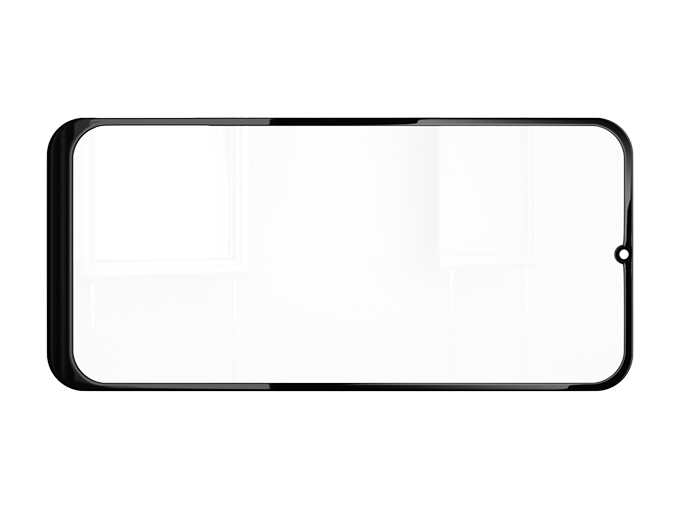



Capacitive touchscreens can be designed with G+G or G+F (or G+FF) structures to achieve an optical transmittance of over 82% (or greater than 90% as required).

Capacitive touchscreens offer responsive touch without the need for pressure, natively support multi-touch, and provide a natural, intuitive user experience—making them the mainstream choice for smartphones and tablets.

The surface hardness of capacitive touchscreens is ≥7H (can be designed to 8H or 9H as needed), with strong scratch and impact resistance. They meet IK8 to IK11 requirements, have no moving parts, and a lifespan exceeding 1 million cycles.

Capacitive touchscreens are resistant to contaminants and support IP66F/IP67F protection ratings, making them suitable for restaurant POS systems, industrial HMIs, and outdoor kiosks.

Modern capacitive touchscreens are compatible with various gloves and operate reliably across a wide temperature range of -30°C to 85°C, meeting diverse application scenarios.

Capacitive touchscreens enable slim and lightweight designs, significantly reducing thickness and weight. COF technology saves space, facilitating portable devices.
A capacitive grid array comprising a network of precisely arranged row and column electrodes formed from transparent conductive film, with each intersection serving as a micro-capacitor unit.
A control unit applies a potential difference to generate a uniform electrostatic field, ensuring an equal charge stored in each unit.
A touch point's parasitic capacitance couples with the electrostatic field, inducing localized charge transfer and causing a reduction in charge at the touch point.
The control unit performs high-frequency scanning to monitor charge variations, and algorithms analyze the coordinate data to achieve X-Y positioning and multi-touch functionality.
High sensitivity, durability, and high optical transmittance, with support for complex gestures.







 English
  中文
中文  日本語
日本語  한국어
한국어  français
  Deutsch
  Español
  italiano
  русский
  Türkçe
  português
  Indonesia