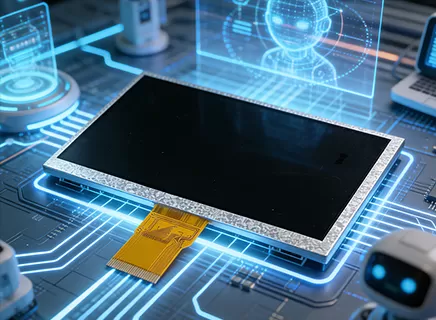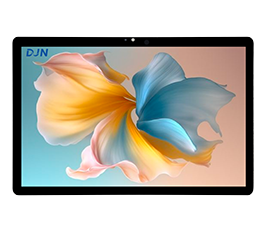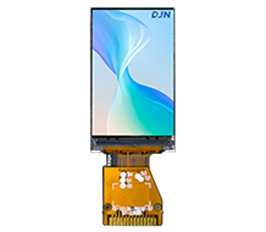
The right display technology for an embedded device depends on how the product is used, what information it needs to display, and how long it must operate reliably. OLED offers excellent contrast, fast response, and self-emissive pixels, while an IPS LCD provides stable brightness, longer service life, and flexible module options for industrial applications.
When evaluating the LCD OLED difference, engineers should consider more than image quality. Factors such as display content, operating time, power requirements, environmental conditions, and integration flexibility all influence whether an OLED or an IPS LCD module is the better choice.
The main difference between OLED and IPS LCD comes from how each technology produces images. OLED displays use self-emitting organic pixels that generate their own light, while IPS LCD panels rely on an LED backlight passing through liquid crystal layers to create images.
This difference affects several key performance characteristics:
| Feature | OLED Display | IPS LCD Module |
|---|---|---|
| Light source | Self-emissive pixels | LED backlight |
| Contrast | Very high contrast with true black | High contrast with backlight structure |
| Viewing angle | Excellent viewing performance | Wide viewing angles with stable colors |
| Brightness stability | Depends on OLED material and usage | Suitable for long-term industrial operation |
| Lifespan | Limited by organic materials and usage conditions | Long operational lifetime with proper backlight design |
| Customization | Available but often limited by size and supply conditions | Wide range of industrial module options |
The oled and lcd difference becomes especially important in embedded products where reliability and consistent performance are required.
Devices such as industrial controllers, medical equipment, smart terminals, and automation systems often prioritize long service life and stable operation over maximum contrast alone.
An IPS LCD module is commonly selected for embedded applications because it provides reliable image quality, flexible interfaces, and a broad range of available sizes for different product designs.
The type of content displayed is one of the most important factors when selecting between OLED and IPS LCD technology.
OLED is highly suitable for interfaces that display simple graphics, icons, text information, or high-contrast visual elements. Since each pixel produces its own light, OLED can achieve deep blacks and excellent contrast without requiring a backlight.
A graphic OLED display is often used in compact embedded devices such as:
Portable measurement instruments.
Wearable electronics.
Small control panels.
Industrial indicators with limited information display.
These applications benefit from OLED’s compact structure, fast response time, and strong contrast performance.
Embedded devices with colorful dashboards, detailed graphics, or continuously updated information often require a larger and brighter display solution. IPS LCD technology provides stable color reproduction and supports various resolutions suitable for graphical user interfaces.
Examples include:
Industrial HMIs with multiple data screens.
Medical monitoring equipment.
Vehicle control systems.
Smart charging terminals.
For these applications, the advantages of an IPS LCD module often include easier integration, better long-term availability, and stronger adaptability for different operating environments.
Power consumption and lifetime are important considerations for embedded products because many devices operate continuously or have strict energy requirements.
The OLED display power consumption depends heavily on the displayed content. Since OLED pixels emit their own light, dark images can consume less power because fewer pixels require active illumination. However, bright images with large white areas require more current from the OLED materials.
This characteristic makes OLED efficient for applications with mostly dark interfaces but less predictable for continuously bright content.
OLED display lifespan is affected by factors such as brightness level, operating temperature, and usage pattern. Organic materials gradually degrade over time, and certain colors may age differently, potentially causing image uniformity issues in long-term applications.
For products requiring many years of continuous operation, engineers often evaluate whether OLED’s visual advantages justify the expected operating conditions.
IPS LCD panels use LED backlights with mature industrial manufacturing processes. With appropriate brightness selection and thermal management, they can provide stable performance for long-term embedded applications.
This makes IPS LCD a common choice for equipment where consistent operation and predictable lifecycle management are priorities.
For embedded product manufacturers, display selection is not only a technology decision but also an integration decision. ODM support can significantly influence the final display solution by adapting the module to the product structure and user requirements.
During the design process, engineers may need to consider:
Display size and mechanical dimensions.
Interface compatibility with the main control system.
Touch functionality and user interaction methods.
Brightness requirements for different environments.
Future production stability and supply availability.
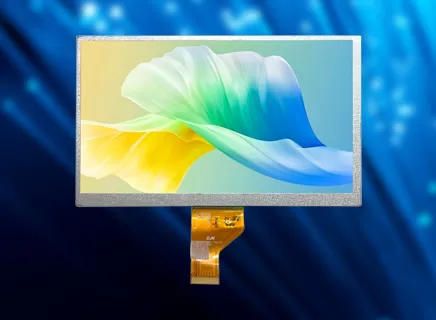
An IPS LCD module can be customized with different resolutions, interfaces, cover structures, and touch solutions to fit specific embedded products. For touchscreen applications, integration with a capacitive touch panel allows manufacturers to create modern interactive interfaces while maintaining reliable operation.
DJN LCD provides customized display solutions for embedded applications, supporting product developers in selecting and optimizing LCD modules according to performance requirements, mechanical constraints, and production goals.
The main difference is that OLED pixels generate their own light, while LCD displays use a backlight. OLED provides excellent contrast and deep blacks, while LCD technology offers stable brightness, mature manufacturing, and flexible industrial applications.
Neither technology is suitable for every application. OLED is often preferred for compact devices requiring high contrast and simple graphics, while IPS LCD is commonly chosen for products requiring long operation, larger screens, and stable image performance.
OLED power consumption depends on displayed content. Dark interfaces can reduce OLED power usage, but bright images may consume more energy. LCD power consumption is generally more predictable because it relies on a constant backlight system.
OLED lifespan depends on brightness, temperature, usage conditions, and operating time. Products with continuous operation requirements should evaluate OLED lifetime specifications carefully before selection.
IPS LCD modules provide wide viewing angles, stable colors, multiple size options, and reliable long-term performance, making them suitable for industrial equipment, medical devices, and embedded systems.
Yes. IPS LCD modules can be combined with capacitive touch panels or other touch technologies to create interactive embedded displays for control systems and smart devices.
The choice between OLED and IPS LCD should be based on the actual workload of the embedded device. OLED delivers outstanding contrast and compact design advantages, while IPS LCD provides reliable performance, flexible customization, and long-term stability for many industrial applications.
For embedded products expected to operate continuously, display reliability, power characteristics, and integration requirements are often as important as visual performance. Selecting the right display technology at the design stage helps create a product that delivers consistent user experience throughout its lifecycle.


 English
  中文
中文  日本語
日本語  한국어
한국어  français
  Deutsch
  Español
  italiano
  русский
  Türkçe
  português
  Indonesia