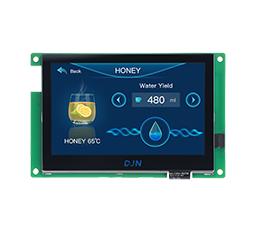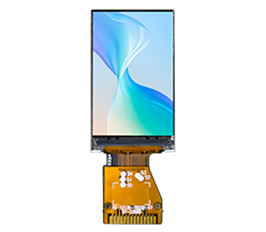
What's an IPS display? An IPS display is a type of TFT LCD technology that uses In-Plane Switching to improve viewing angles, color consistency, and image stability compared with traditional LCD structures. For industrial HMIs, an IPS TFT LCD module is often selected when operators need clear visibility from different positions, reliable performance in demanding environments, and consistent image quality throughout the product lifecycle.
Choosing an LCD module for an industrial HMI requires more than selecting a screen size. Engineers need to evaluate display technology, viewing direction, resolution, interface compatibility, mechanical dimensions, touch integration, and long-term supply stability. A suitable IPS LCD module should match the operating conditions and system requirements of the final equipment.
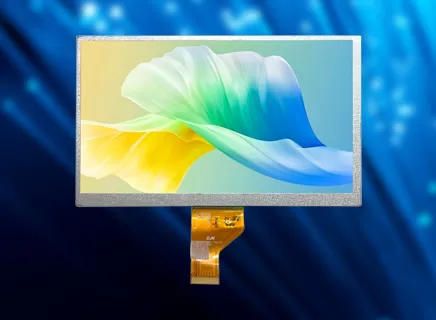
An IPS display is a TFT LCD panel that uses a different liquid crystal alignment structure to control light transmission. Unlike conventional TN LCD panels, IPS technology keeps liquid crystal molecules switching within the same plane, which helps maintain stable colors and brightness when viewed from different angles.
TFT display technology refers to the active matrix control method used in modern LCDs. Each pixel is controlled by a thin-film transistor, allowing faster response times, higher resolution, and better image control. IPS is one of the major TFT LCD technologies used in industrial applications, alongside TN and VA technologies.
For industrial HMIs, the combination of TFT control and IPS panel technology provides several practical advantages:
Wide viewing angles: Operators can read information clearly even when standing away from the center of the display.
Stable color performance: Important for equipment interfaces that display warning indicators, measurement data, or graphical controls.
Better image consistency: Useful for machines installed in factories, medical environments, transportation systems, and outdoor equipment.
An IPS TFT LCD is therefore not simply a consumer display component. Industrial-grade IPS modules are designed around reliability, integration flexibility, and long operating periods.
Viewing direction is a critical factor when selecting a display for an industrial HMI because operators rarely interact with equipment from a fixed position. Control panels may be installed at different heights, angles, or locations where multiple users need to read the screen.
Traditional LCD technologies may experience contrast reduction or color shifting when viewed from the side. An IPS display minimizes these changes, making it suitable for applications where information needs to remain readable from different angles.
Screen orientation is another important consideration. Industrial devices may require:
Landscape or portrait installation depending on equipment structure.
Specific viewing directions based on operator position.
Customized brightness levels for indoor, semi-outdoor, or outdoor environments.
When designing an HMI, engineers should confirm the expected viewing angle, installation position, ambient lighting conditions, and user interaction scenario before selecting an IPS LCD module.
Display selection is closely connected with the electrical and mechanical design of the HMI system. A high-quality panel alone cannot guarantee successful integration if the resolution, interface, or physical dimensions do not match the application requirements.
The required resolution depends on the information displayed on the HMI. Simple control panels may only require basic graphics, while industrial automation equipment, medical devices, and smart terminals often need higher resolutions for detailed interfaces.
Engineers should balance:
Screen size and viewing distance.
Graphics complexity and UI layout.
Processor capability and system memory.
Common interfaces for IPS TFT LCD modules include RGB, MCU, SPI, MIPI DSI, and LVDS. The selected interface must be compatible with the main control board to ensure stable communication and efficient development.
For example, compact embedded devices may prefer SPI or MIPI interfaces, while larger industrial displays may use LVDS or RGB interfaces for higher data transmission requirements.
The overall LCD module size, active area, bezel structure, mounting holes, and connector position all influence HMI integration. Early confirmation of mechanical requirements can reduce redesign costs during product development.
Industrial HMI projects often require more than an off-the-shelf display. ODM customization allows manufacturers to adapt an IPS LCD module according to specific equipment requirements, helping customers achieve better product integration.
Typical customization options include:
Touch integration: Combining the display with a capacitive touch panel to create a complete interactive interface.
Mechanical customization: Adjusting module dimensions, mounting structures, or connector locations.
Optical improvements: Optimizing brightness, contrast, and viewing performance for different environments.
Interface adjustment: Supporting different communication methods according to the host system.
For industrial applications, integrating a capacitive touch panel with an IPS TFT LCD can improve user experience by providing responsive operation, multi-touch capability, and a cleaner interface design compared with traditional button-based controls.
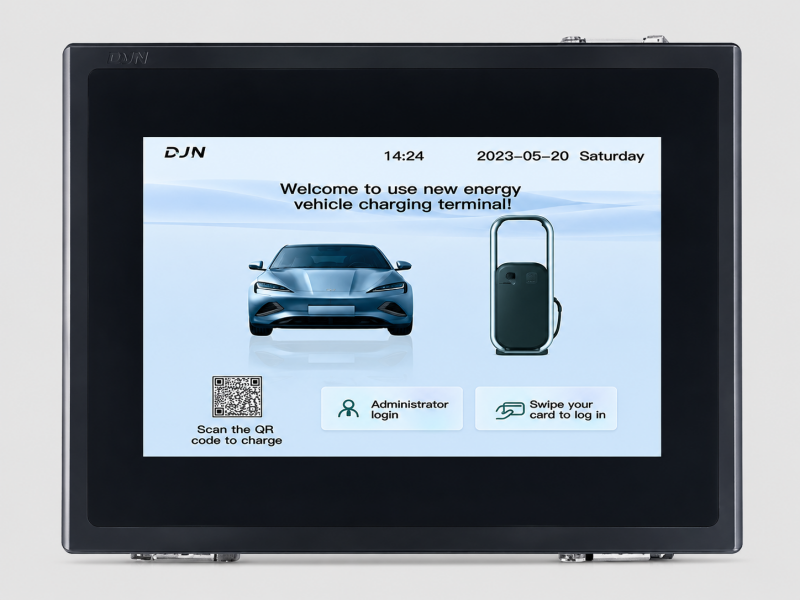
At DJN LCD, we provide IPS TFT LCD solutions for industrial display applications, supporting customization requirements from module selection to HMI integration. Our engineering team can help evaluate display size, interface, touch structure, and application conditions to develop a suitable display solution.
IPS displays are widely used in industrial HMIs, medical equipment, automation systems, smart terminals, vehicle displays, and other applications where wide viewing angles and stable image quality are important.
IPS is a type of TFT LCD technology rather than a completely separate category. An IPS TFT LCD generally provides better viewing angles and color stability compared with traditional TN TFT LCD panels, making it suitable for many industrial applications.
Key factors include display size, resolution, viewing angle, brightness, operating environment, interface type, mechanical dimensions, touch requirements, and expected product lifetime.
Yes. Many industrial display solutions combine an IPS LCD module with a capacitive touch panel to provide a complete touchscreen HMI. The touch structure can be customized according to thickness, sensitivity, and application requirements.
IPS TFT LCD modules offer stable viewing performance, reliable image quality, and flexible integration options, making them suitable for equipment used in manufacturing, healthcare, transportation, and commercial automation.
Yes. OEM and ODM display solutions can customize screen size, interface, touch functions, mechanical design, brightness, and other specifications to match the requirements of different HMI systems.
Selecting an IPS display for an industrial HMI should start from the application environment rather than the display specification alone.
Viewing conditions, user interaction, system interface, mechanical structure, and long-term reliability all influence the final module choice.
A properly matched IPS TFT LCD provides the visual stability and integration flexibility required for modern industrial equipment. By working with an experienced display manufacturer, companies can develop LCD solutions that fit their product design, performance expectations, and future production needs.



 English
  中文
中文  日本語
日本語  한국어
한국어  français
  Deutsch
  Español
  italiano
  русский
  Türkçe
  português
  Indonesia